Service Plans Timed to the Monsoon Calendar
Typical installed cost: Custom service plans
Ceiling stains in a Tucson office tend to show up in July, get a bucket, and are forgotten by October. By next June the same seam is worse. A fixed service calendar ends that loop.
Thermal imaging for hidden wet insulation
Cameras read the roof after sunset, when wet insulation holds heat longer than dry. Repairs then go where the water is entering, not where it dripped.
Late May and early October visits
The spring visit clears dust and debris from scuppers and drains ahead of the season. The fall visit inspects for what the storms and heat did.
Sealants cooked by the sun
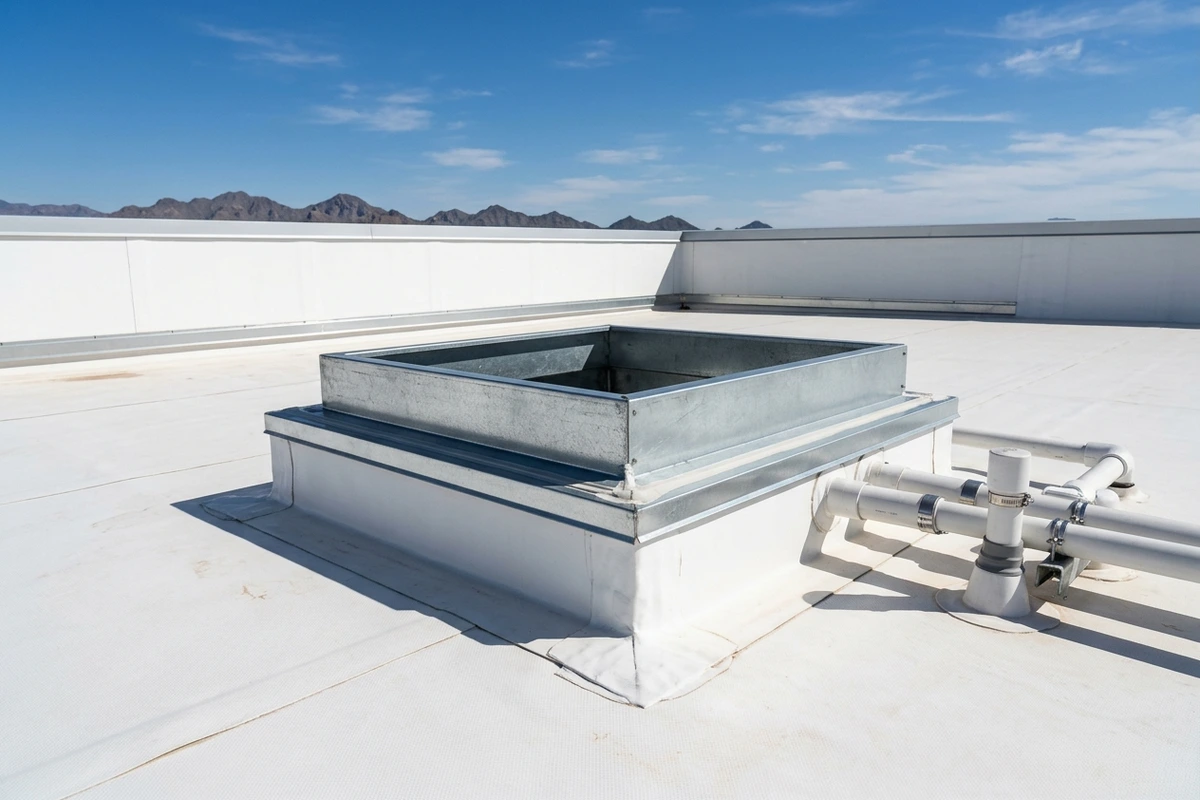
Caulk and mastic at curbs, pitch pockets and pipe boots turn brittle quickly in UV. Those are the first details to fail, so they are the first we re-seal.
Storm-day tarping
After wind damage or a dislodged rooftop unit, we stabilize the opening and document it for your insurer.
Before You Book Roof Repair Programs
How many inspections does a Pima County roof need each year?
Two is the floor: one before monsoon starts around mid-June and one after it ends. Add a visit after any big wind event or when HVAC contractors have been on the roof.
Why does a roof that was dry in May leak in July?
Heat opens seams and ruins sealants, then a cloudburst outruns a drain that was half full of dust. Wind-driven rain also finds parapet caps and edge metal that sit dry the other nine months.
Also Available Locally
Based in Tucson; also serving Central Tucson, Downtown Tucson, Oro Valley, Marana, Sahuarita, Vail, Catalina Foothills, South Tucson and the Southern Arizona.